
Pilot interview questions: sample answers in simple English
An airline pilot interview in English checks two things at once: what you know and how you communicate. For cadets and first officers whose first language is not English, the second part needs its own practice. This guide gives you questions to prepare, short sample answers in simple English (B1–B2), and the rules behind the technical answers — so that what you say matches EASA, the FAA and ICAO.
Every airline interviews in its own way, and no regulator we checked prescribes the questions. The questions below are our selection; the sample answers are examples to change into your own story. This is not the ICAO language test: for its interview task, see ICAO English test sample.
A simple map for your answers: the pilot competencies
EASA describes what a good airline pilot does in a list of nine recommended competencies (AMC1 ORO.FC.231(b)). It closely follows the ICAO competency framework in PANS-TRG (Doc 9868). The AMC recommends it for operators that run evidence-based training (EBT), for training and checks. It is not a hiring rule, but it is a useful map: if your answer shows one of these, it is a pilot's answer.
| Competency | What it means (in simple words) |
|---|---|
| Application of knowledge | knows the procedures, the aircraft systems and the environment |
| Application of procedures | follows procedures and regulations |
| Communication | communicates in normal and non-normal situations |
| Flight path management | controls the flight path with automation or by hand (two competencies) |
| Leadership and teamwork | influences others to contribute to a shared purpose |
| Problem solving and decision making | identifies warning signs, reduces problems and makes decisions |
| Situation awareness | perceives, understands and manages information |
| Workload management | keeps spare capacity by prioritising and sharing tasks |
For a story question ("Tell me about a time when…"), use four short steps: the situation, what you did, the result, what you learned. Keep each step to one or two sentences.
Part 1: you and your training
1. "Tell me about yourself."
Cadet: "I finished my CPL training last year at a school in Spain, with about 200 hours. My instrument training was the part I enjoyed most. Now I want to start my airline career as a first officer."
Experienced: "I have been a first officer on the A320 for three years, mostly short-haul flights. Last year I joined our airline's safety group. I am applying because I want to fly long-haul and grow towards command."
2. "Why did you choose this cadet scheme?"
"It offered a clear path into airline work: training, a type rating and line training with one company."
3. "What did you learn in line training?"
"After the simulator, I learned to make decisions with an instructor on real flights — with real weather, real delays and real passengers."
4. "Why do you want to leave your current airline?" They check: is there a problem behind your answer? Be positive and short.
"I am happy there, but I want to fly a wide-body aircraft, and your fleet gives me that chance."
5. "Where do you see yourself in five years?"
"I hope to be a senior first officer and to start preparing for the command course."
Part 2: teamwork and decisions
6. "What do you do if you disagree with the captain?" They check: will you speak up for safety, and will you do it calmly? EASA CRM guidance says CRM training should include guidance to the pilot monitoring on "when it would be appropriate to intervene, if felt necessary, and how this should be done in a timely manner" (AMC1 ORO.FC.115(f)(2)).
"I say what I see, with facts: 'Captain, we are 15 knots fast at 1,500 feet.' If nothing changes and safety is at risk, I say it again more clearly and use the call-outs and intervention steps in our procedures. On final approach, that can mean calling for a go-around. After the flight we discuss it in the debrief."
7. "Tell me about a mistake you made." They check: honesty, and what you learned. Choose a small, real mistake, not a disaster.
"On a training flight I set the wrong altitude in the autopilot. My instructor's cross-check caught it. Since then I always point at the value and say it out loud. I learned that a good cross-check is a team habit, not a sign of distrust."
In threat and error management (TEM), this is an error: "an action or inaction by the flight crew that leads to deviations from organisational or flight crew intentions or expectations" (EASA definitions).
8. "How do you manage fatigue?" They check: do you know your own responsibility? Under EASA rules, crew members shall "make optimum use of the opportunities and facilities for rest provided and plan and use their rest periods properly" (ORO.FTL.115(b)), and shall not perform duties if they know or suspect they are fatigued to the extent that the flight may be endangered (CAT.GEN.MPA.100, point c). Under 14 CFR 117.5(d), each flightcrew member "must affirmatively state he or she is fit for duty prior to commencing flight".
"I plan my rest before an early start and I use my rest periods to sleep, not for other work. If I feel too tired to fly safely, I tell the captain and the company before the flight. That is my responsibility, not a weakness."
9. "Tell me about a time when your workload was very high."
"During a busy arrival, the autopilot disconnected and ATC gave us a new runway. The captain flew the aircraft by hand, and I took the radio and the new briefing. We asked for extra time instead of rushing. In the debrief I spelled out each step of our decision."
10. "What would you do with an aggressive passenger before departure?"
"I would support the captain's decision and the cabin crew. If the passenger keeps shouting and will not calm down, the captain can decide to offload him, and we follow the company procedure with airport security."
Part 3: technical questions
Keep these answers short and correct. If you are not sure about a number, say what you know.
What is CRM? EASA: "CRM is the effective utilisation of all available resources (e.g. crew members, aircraft systems, supporting facilities and persons) to achieve safe and efficient operation." The FAA says CRM training "focuses on situation awareness, communication skills, teamwork, task allocation, and decisionmaking" (AC 120-51E).
"CRM means using all the resources we have — the other pilot, the cabin crew, ATC, the aircraft systems — to make the flight safe and efficient."
What is TEM? What is a threat? ICAO defines threats as "events or errors that occur beyond the influence of the flight crew, increase operational complexity, and must be managed to maintain the margins of safety". Examples in PANS-TRG: bad weather, high terrain around an airport, congested airspace, aircraft malfunctions and errors by people outside the cockpit, such as controllers. Errors are the crew's own actions or inactions. An undesired aircraft state is, for example, lining up for the wrong runway or exceeding a speed restriction. ICAO adds that TEM training "does not replace CRM training but rather complements and enhances it".
"TEM means we look for threats before they become a problem — for example, we brief the thunderstorms on the arrival — and we catch our own errors with cross-checks."
What is the sterile cockpit rule? The idea is simple: in critical phases of flight, the crew does only what the flight needs. The details differ:
| Item | US (FAA, 14 CFR 121.542) | Europe (EASA) |
|---|---|---|
| When | taxi, takeoff, landing and all flight below 10,000 ft, except cruise | take-off, final approach, missed approach, landing, and other phases the commander decides |
| Name in the rules | no special name in 121.542 | "sterile flight crew compartment" |
The FAA rule gives examples of what is not allowed: meals, "nonessential conversations within the cockpit", nonessential calls between cabin and cockpit, and reading publications not related to the flight.
What is a stabilised approach? Under EASA rules, "all approach operations shall be flown as stabilised approach operations unless otherwise approved by the competent authority for a particular approach to a particular runway" (CAT.OP.MPA.115(a)). EASA's acceptable means (AMC) say the aeroplane should be stabilised for landing before 500 ft above the runway threshold elevation, and before 1,000 ft when the pilot has no visual reference with the ground. Stabilised means within acceptable tolerance of the correct lateral and vertical path, speed and rate of descent, in the landing configuration, with suitable thrust and trim settings. The exact limits are in your operator's manual: in the interview, don't guess them from memory. The FAA's advisory circular AC 91-79A uses similar 1,000 ft and 500 ft windows (the 500 ft window is above touchdown zone elevation, in visual conditions) and adds: an approach that requires "abnormal bracketing" "does not meet the stabilized approach concept, and a go-around should be initiated".
"A stabilised approach means we are on the right path and at the right speed, in the landing configuration, with the right thrust, before a set height. EASA guidance says 500 ft above the runway threshold at the latest, and 1,000 ft if we have no visual reference with the ground. My operator's manual gives the exact gate and limits. If we are not stabilised at the gate, our procedures say we go around."
Part 4: when you don't understand the question
On a video call or in a panel interview with new accents, you may miss a word. Asking is normal. EASA CRM guidance itself notes that "difficulties may arise when crew members with different mother tongue communicate in a common language which is not their mother tongue". Useful phrases:
- "Could you rephrase the question about crew training?"
- "Sorry, I missed the last part. Could you repeat it?"
- "Do you mean in the simulator or on a real flight?"
If you don't know the answer, say what you know: "I am not sure about the exact figure, but I know it is in the operations manual, and I would check it there." An honest "I am not sure" is better than a confident wrong number.
Examples from PeakTalk courses
These sentences are from PeakTalk's ICAO Test Prep course. Many of its cards are about training and airline life, so they work well for interview practice. Say each sentence aloud, then change one detail so it is true for you.
- "After joining the airline, she completed a type rating for the Airbus A320 before working on that aircraft."
- "In the debrief, the instructor asked me to spell out each step of my decision."
- "A pilot can fail a check for poor decision-making, even if the handling is acceptable."
- "The first officer became distracted by a cabin issue and missed part of the weather update."
- "How long did it take you to convert your licence after moving to another country?"
- "The airline selected her to upgrade to captain after several years as a first officer."
Try it: 5 quick questions
- Under 14 CFR 121.542, critical phases of flight include all flight below:
- a) 5,000 ft
- b) 10,000 ft, except cruise
- c) 18,000 ft
- In TEM, a thunderstorm on your arrival route is:
- a) a threat
- b) an error
- c) an undesired aircraft state
- EASA's AMC says that, in visual conditions, the aeroplane should be stabilised for landing before reaching:
- a) 50 ft above the threshold
- b) 1,500 ft above the threshold
- c) 500 ft above the threshold elevation
- You did not understand an interview question. The best answer is:
- a) "Could you rephrase the question, please?"
- b) A guess, so you don't lose time.
- c) "Yes."
- Under EASA CAT.GEN.MPA.100 (point c), what must a crew member do if he or she knows or suspects they are so fatigued that the flight may be endangered?
- a) Fly, and rest after the flight.
- b) Not perform the duty.
- c) Ask the other pilot to do all the work.
Answers: 1 b · 2 a · 3 c · 4 a · 5 b
A 2-week preparation plan
Days 1–3: your story. Write answers to questions 1–5 in three or four sentences each. Record yourself and listen: are the sentences short and clear?
Days 4–7: your stories. Prepare four real situations from your training or line flying: a disagreement, a mistake, a high-workload moment, a difficult passenger or weather decision. Tell each one in four steps: situation, action, result, lesson.
Days 8–11: technical basics. CRM, TEM, the sterile flight deck, the stabilised approach, fatigue rules, and the systems of the aircraft you fly or will fly. Explain each one in three sentences of plain English.
Days 12–14: a mock interview. Ask a friend or colleague to interview you on a video call and to add two questions you did not prepare. Practise "Could you rephrase that?" at least once.
For the English basics behind these answers, see Aviation English vocabulary and our guide to aviation English.
Practise aviation English in PeakTalk
Sources
- EASA — Easy Access Rules for Air Operations (Regulation (EU) No 965/2012), March 2026
- EASA — Easy Access Rules for Aircrew (Regulation (EU) No 1178/2011), FCL.055
- FAA — 14 CFR 121.542, Flight crewmember duties
- FAA — 14 CFR 117.5, Fitness for duty
- FAA — AC 120-51E, Crew Resource Management Training
- FAA — AC 91-79A Change 1, Mitigating the Risks of a Runway Overrun Upon Landing
- ICAO — PANS-TRG, Doc 9868, 3rd edition 2020 (copy hosted by FFAC)
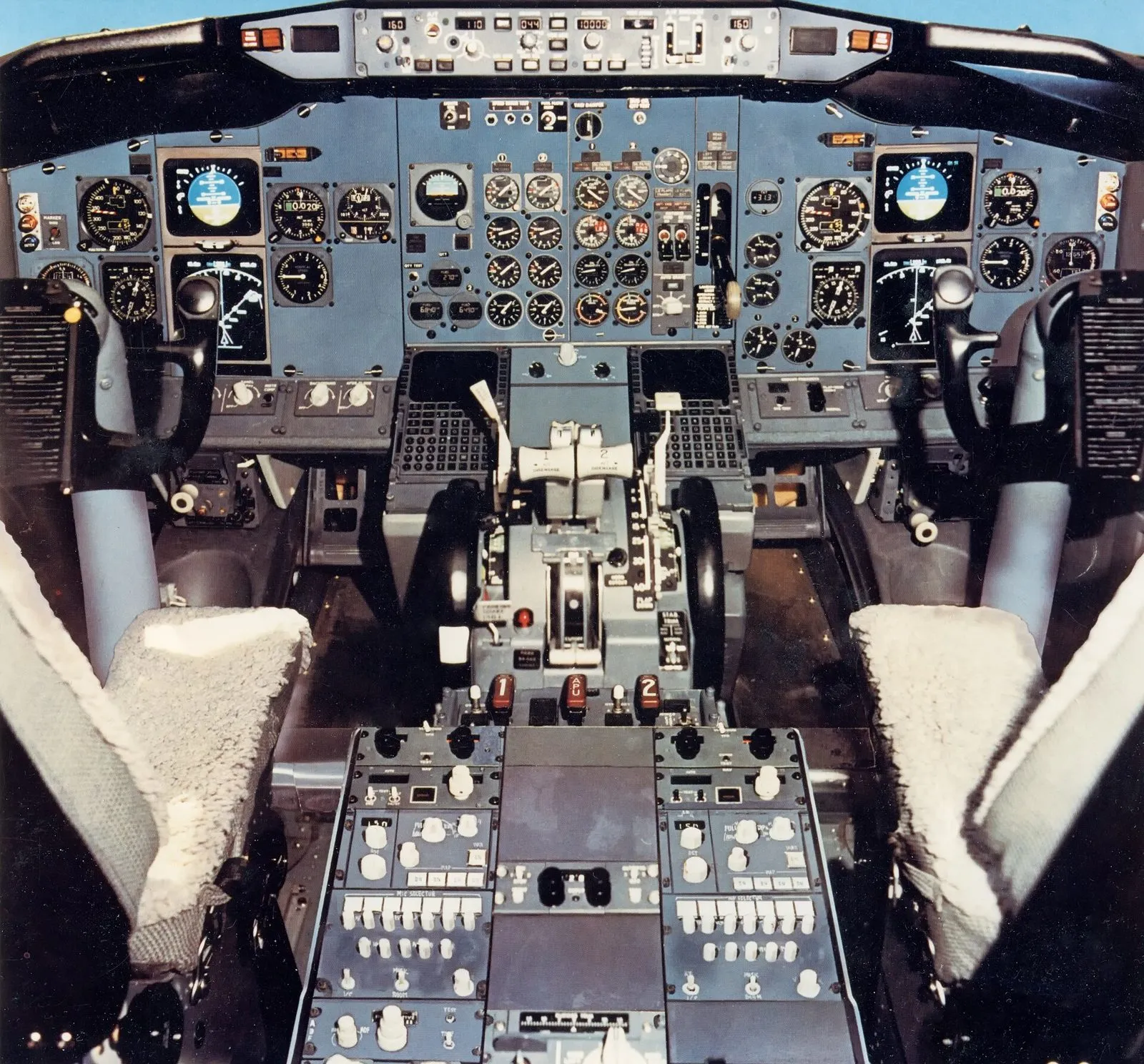
Technical answers in this guide are based on the sources above: EASA Easy Access Rules for Air Operations (AMC1 ORO.FC.231(b), ORO.FC.115, ORO.FTL.115, CAT.GEN.MPA.100, CAT.OP.MPA.115 and definitions), EASA FCL.055, FAA 14 CFR 121.542 and 117.5, FAA AC 120-51E and AC 91-79A, and ICAO PANS-TRG (Doc 9868). Interview questions and sample answers are our own examples; every airline interviews in its own way. Last checked on 27 November 2026. PeakTalk is not affiliated with EASA, the FAA, ICAO or any airline. Cover photo: Boeing 737-300 cockpit by Weatherhistory, CC0, via Wikimedia Commons.

Frequently asked questions
- What questions are asked in a pilot interview?
- Every airline has its own format, and no regulator we checked sets the questions. In this guide we cover three areas: you and your training; teamwork and decisions (a disagreement, a mistake, fatigue, high workload); and technical knowledge such as CRM, threat and error management, the sterile flight deck and the stabilised approach.
- How do I answer "Tell me about yourself" in a pilot interview?
- Keep it to three or four sentences: your licence and hours or training stage, your last aircraft or school, one thing you are proud of, and why you are applying now. Then stop and let the interviewer ask more.
- What is the difference between CRM and TEM?
- EASA defines CRM (crew resource management) as the effective use of all available resources (crew members, aircraft systems, supporting facilities and persons) to achieve safe and efficient operation. TEM (threat and error management) is a wider safety concept about threats, errors and undesired aircraft states. ICAO says TEM training does not replace CRM training but complements it.
- What is the sterile cockpit rule?
- For US airlines (14 CFR Part 121), section 121.542 allows only duties required for the safe operation of the aircraft during critical phases of flight: taxi, takeoff, landing and all flight below 10,000 feet except cruise. EASA has the same idea but no altitude: critical phases are the take-off, final approach, missed approach and landing, plus phases the commander decides.
- What English level do I need for a pilot interview?
- For your licence, EASA FCL.055 sets ICAO Level 4 (operational) as the minimum for pilots who use the radio. We found no rule that sets an English level for airline interviews; that is the airline's own decision. In practice you need clear, short answers and the confidence to ask when you don't understand.