
IMO SMCP: the Standard Marine Communication Phrases explained, with examples
On the radio, a short misunderstanding can cause an accident. That is why IMO created the Standard Marine Communication Phrases (SMCP): fixed English phrases for VHF and on board, so that a Filipino officer, a Greek pilot and a Dutch VTS operator understand each other the same way. This guide explains how SMCP works, with examples taken from the official text.
What is SMCP?
The IMO SMCP was adopted on 29 November 2001 by resolution A.918(22). It replaced the older Standard Marine Navigational Vocabulary (SMNV) from 1977, amended in 1985.
Two rules make it important for watch officers:
- SOLAS (regulation V/14.4) says English is the working language on the bridge for bridge-to-bridge and bridge-to-shore safety communication, unless everyone involved speaks another common language.
- STCW requires officers in charge of a navigational watch on ships of 500 GT or more to be able to use and understand the IMO SMCP.
How SMCP is organised
| Part | What it covers |
|---|---|
| General | procedure: spelling, message markers, responses, corrections, numbers, positions, time, ambiguous words |
| Part A1 | external communication: distress, urgency, safety, pilotage, special operations, VTS |
| Part A2 | on board: standard wheel orders, standard engine orders, pilot on the bridge |
| Part B | on board: ship handling, safety on board, cargo, passenger care |
The eight message markers
A message marker is a word you say before the message. It tells the other station what kind of message follows. Using one is your decision, but IMO recommends making the type of message clear in VTS communication.
| Marker | What it means | Example from SMCP |
|---|---|---|
| INSTRUCTION | a rule from someone with full authority (VTS, naval vessel); you must follow it unless safety reasons prevent it | "INSTRUCTION. Do not cross the fairway." |
| ADVICE | a recommendation; you decide, but consider it carefully | "ADVICE. (Advise you) stand by on VHF Channel six nine." |
| WARNING | information about danger | "WARNING. Obstruction in the fairway." |
| INFORMATION | observed facts | "INFORMATION. MV Noname will overtake to the west of you." |
| QUESTION | you are asking, and you expect an answer | "QUESTION. (What is) your present maximum draft?" |
| ANSWER | the reply to a question; it should not contain another question | "ANSWER. My present maximum draft is zero seven metres." |
| REQUEST | you want something arranged: tugs, stores, permission; not for navigation | "REQUEST. I require two tugs." |
| INTENTION | your own next navigational action | "INTENTION. I will reduce my speed." |
Basic rules: responses, corrections, numbers
Yes and No. Answer with "Yes" or "No" and then the phrase in full: "Yes, fire is under control." Not just "Yes".
Responding to an instruction or advice. Answer "I will …" or "I will not …" and repeat it in full:
- "ADVICE. Do not overtake the vessel North of you."
- "I will not overtake the vessel North of me."
When you need time: "Stand by" plus the time interval in which you will have the information. When you cannot get it: "No information."
Corrections. Say "Mistake", then "Correction" and the right part: "My present speed is 14 knots — mistake. Correction, my present speed is 12, one-two, knots."
Repetition. To protect an important part, say "Repeat": "Do not overtake — repeat — do not overtake." If you did not hear a message: "Say again (please)."
Numbers. Say each digit separately: 150 is "one-five-zero", 2.5 is "two decimal five". The exception is rudder angles in wheel orders: "fifteen", "twenty".
Pronunciation of digits. Some digits have a special pronunciation: 3 TREE, 4 FOWER, 5 FIFE, 9 NINER, 1000 TOUSAND. Letters use the standard spelling alphabet: Alfa, Bravo, Charlie…
Time and units. Use 24-hour UTC time (say clearly if you use local time), knots for speed and nautical miles or cables for distance, always with the unit.
Words to avoid: may, might, should, could
These words can mean different things, and SMCP says they have caused accidents in VTS communication. Use a message marker and a clear sentence instead:
| Do not say | Say |
|---|---|
| "May I enter the fairway?" | "QUESTION. Do I have permission to enter the fairway?" |
| "You may enter the fairway." | "ANSWER. You have permission to enter the fairway." |
| "I might enter the fairway." | "INTENTION. I will enter the fairway." |
| "You should anchor in anchorage B 3." | "ADVICE. Anchor in anchorage B 3." |
| "You could be running into danger." | "WARNING. You are running into danger." |
In an unclear situation, the same applies to can when you ask for permission: not "Can I use the fairway?", but "QUESTION. Do I have permission to use the fairway?"
Distress, urgency and safety
| Signal | Used for | Example phrases from SMCP |
|---|---|---|
| MAYDAY | distress message | "I am / MV … on fire." / "I have lost person(s) overboard in position …" |
| PAN PAN | urgency message | messages about the safety of a vessel, for example a technical failure |
| SECURITE | safety message | navigational and weather warnings |
After the signal, SMCP gives ready phrases for each situation: fire, flooding, collision, grounding, piracy, abandoning the vessel, person overboard. The calling procedure itself follows the ITU Radio Regulations.
Standard wheel orders
The helmsman repeats every wheel order, and the officer of the watch checks that it is carried out. Each order stays in force until a new one is given.
| Order | Meaning |
|---|---|
| Midships | rudder in the fore-and-aft position |
| Port / Starboard five, ten, fifteen, twenty, twenty-five | hold that many degrees of rudder |
| Hard-a-port / Hard-a-starboard | rudder fully over |
| Ease to ten | reduce the rudder to 10° and hold |
| Meet her | check the swing of the ship's head in a turn |
| Steady | reduce the swing as quickly as possible |
| Nothing to port / starboard | do not let the head go to port / starboard |
| Steady as she goes | steer the compass heading at the moment of the order |
| Finished with wheel | no more steering |
To order a course, give the direction and then each digit: "Port, steer one eight two." The helmsman repeats the order, turns the ship and, when she is steady, reports: "Steady on one eight two."
Standard engine orders
The person at the engine telegraph repeats every engine order.
- Full / Half / Slow / Dead slow ahead
- Full / Half / Slow / Dead slow astern
- Stop engines
- Emergency full ahead / astern
- Stand by engine
- Finished with engines
With twin propellers, add "both": "Full ahead both", "Slow astern both" — but "Stop all engines".
Try it: choose the SMCP version
- You want permission to enter the fairway.
- a) "May I enter the fairway?"
- b) "QUESTION. Do I have permission to enter the fairway?"
- You said the wrong speed.
- a) "Sorry, I mean 12 knots."
- b) "Mistake. Correction, my present speed is 12, one-two, knots."
- The officer wants course 095°.
- a) "Starboard, steer zero nine five."
- b) "Starboard, steer ninety-five."
- The helmsman hears "Port twenty".
- a) "Port twenty."
- b) "Okay."
- VTS: "ADVICE. Do not overtake the vessel ahead." You agree.
- a) "No problem."
- b) "I will not overtake the vessel ahead."
- You are going to reduce your speed. Which marker do you use?
- a) INTENTION
- b) REQUEST
Answers: 1 b · 2 b · 3 a · 4 a · 5 b · 6 a
How to learn SMCP
- Learn the General part first. Markers, responses, corrections and numbers are used in every exchange.
- Practise out loud. Read wheel orders and say the helmsman's reply. Then say positions, courses and times digit by digit.
- Learn phrases for your job. Deck officers need VTS, pilotage and wheel orders; engineers need engine orders and safety on board.
- Replace your habits. Every time you want to say "may", "should" or "can I", say the SMCP version instead.
If you are also preparing for the Marlins test, see our Marlins test guide.
Practise SMCP in PeakTalk
Sources
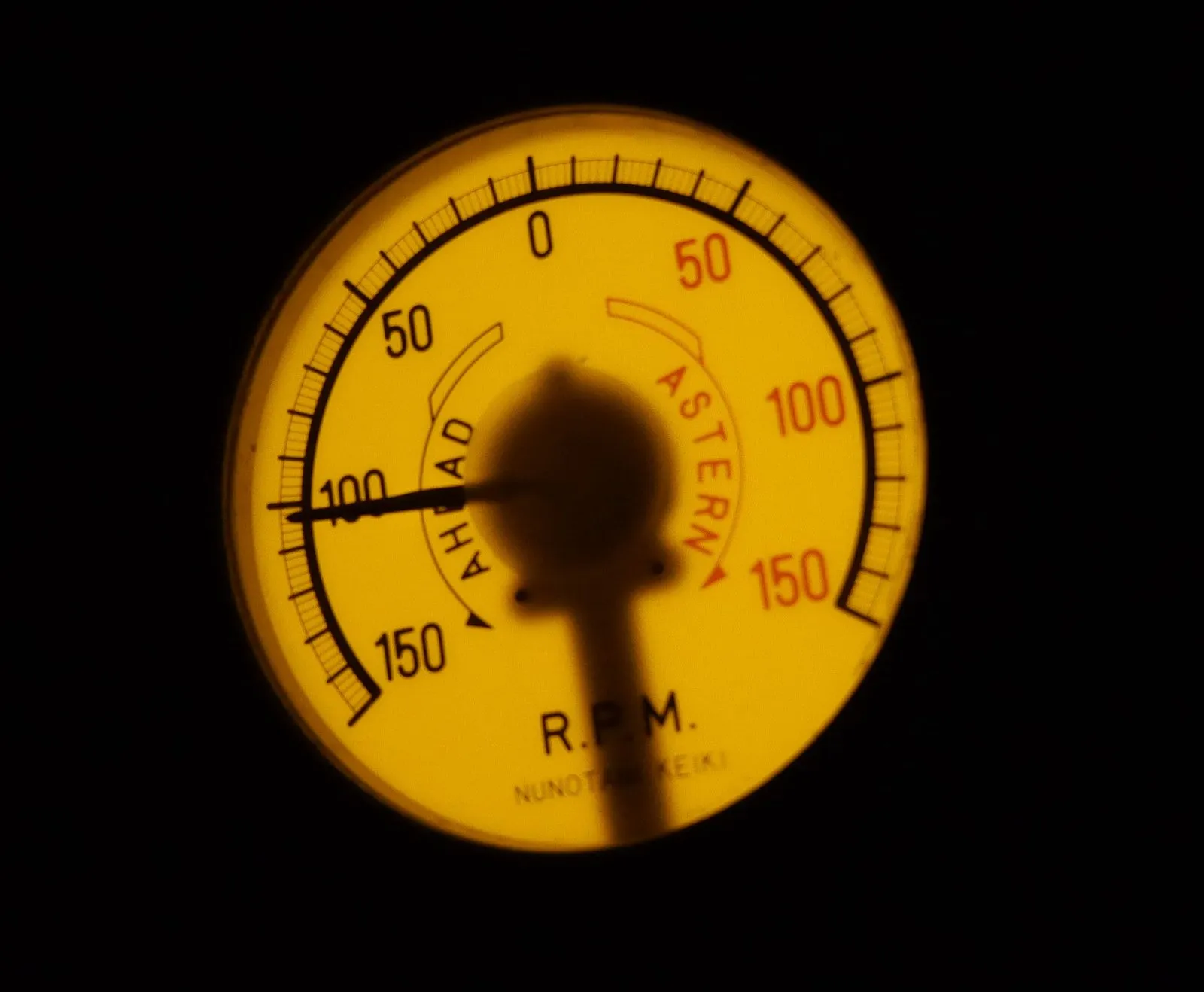
This guide is based on IMO resolution A.918(22) and information from IMO (links below). Last checked on 24 November 2026. PeakTalk is not affiliated with IMO. Cover photo: Global Lives Project, CC BY-SA 2.0, via Wikimedia Commons, cropped.

Frequently asked questions
- What is SMCP?
- SMCP stands for the IMO Standard Marine Communication Phrases. It is a set of standard English phrases for radio communication between ships and shore stations, and for communication on board. IMO adopted it in November 2001 as resolution A.918(22).
- Is SMCP mandatory?
- Under the STCW Convention, officers in charge of a navigational watch on ships of 500 gross tonnage or more must be able to use and understand the IMO SMCP. That is why maritime schools teach it.
- What did SMCP replace?
- It replaced the Standard Marine Navigational Vocabulary (SMNV), adopted in 1977 and amended in 1985. SMCP is broader: it covers distress, safety, VTS, pilotage and communication on board.
- What are the eight message markers?
- Instruction, Advice, Warning, Information, Question, Answer, Request and Intention. You say the marker before the message so that the other station knows its purpose, for example "WARNING. Obstruction in the fairway." Using a marker is the speaker's decision.
- Where can I find the official SMCP text?
- The full text of resolution A.918(22), with all the phrases, is published as a PDF on the IMO website. The link is in the sources at the end of this article.